What Kills a Car Battery the Most?
 By Anthony LimpertASE Master Automobile Technician
Heat kills more car batteries than anything else, and sitting dead finishes the job. Here is what each killer does, how fast it works, and how we check a used car's battery before you buy.
We inspect a lot of used cars, and a lot of them have a battery that is older than the seller thinks. Most of those batteries were not killed by a dome light left on. They were cooked by summer and then left to sit flat on a lot. That is the part most answers to this question skip.
The Short Answer
Heat kills the most car batteries. AAA says a battery lasts 58 months or more in the northern US and less than 41 months in the southern US, Consumer Reports wrote on May 4, 2019. That is at least 17 months of life lost to climate alone. Second place goes to a battery that is drained deep and left that way.
- Lights left on drain a battery for one morning. Heat and deep drains end its life for good.
- Heat does its damage in summer. The battery often fails months later, on the first cold start.
- A battery left sitting flat grows hard crystals on its plates that a charger may never fully clear.
- Short trips, hidden drains and a weak alternator keep a battery low, which feeds the same damage.
- On a used car, a dead or brand new battery is a clue. It can point to a car that sat, or a drain that is still there.
Draining a Battery Is Not the Same as Killing It
Most pages that rank for this question list things that drain a battery. Headlights, a door that did not latch, a phone charger. Firestone's list starts with headlights left on (Firestone Complete Auto Care). That is true, and a jump start fixes it.
Killing a battery is different. It means the battery can no longer hold enough charge to start the car, no matter how many times you jump it. That damage comes from two things more than any others. Heat, and time spent drained. Everything else on the usual lists matters because it leads to one of those two.
Killer One Is Heat
AAA South Jersey says a car battery works best near 77 degrees, and on a summer day its inside can reach 140 degrees or more. It says high heat makes the battery's fluid evaporate, which can cause damage that cannot be undone (AAA South Jersey). A second AAA South Jersey piece adds that heat speeds up the crystals that build on the lead plates (AAA South Jersey, Silent Summer Threat).
The tricky part is the timing. Optima, a battery maker, says the damage is done in the hot months and the failure shows up in winter. Its line is that the more hot weather we get in summer, the more batteries fail the next winter (Optima, September 15, 2020). So cold gets the blame for a battery that heat already killed. A tired battery just cannot push out enough power on a cold morning.
AAA Texas put it plainly on July 29, 2026. Daniel Armbruster told KXII that “heat and vibration are a battery's worst enemy” (KXII). Vibration matters on a used car too. A battery with a missing or loose hold down clamp gets shaken every time the car hits a bump.
Heat Takes Months, a Drain Takes Days
How long a battery lasts by region, and how long a parked 60 Ah battery lasts by drain size.
Battery life in months (AAA)
Days until a parked 60 Ah battery is drained (Battery Tender)
Sources are Consumer Reports citing AAA, and the Battery Tender parasitic drain guide. Bars are drawn to the top of each range.
Killer Two Is Sitting Drained
A car battery is built to stay near full. Optima says sulfation really starts to hurt a battery once it drops below 12.4 volts and is left sitting there. It also says one of its standard batteries reads about 12.6 to 12.8 volts at rest when full. The lower it sits, and the longer, the more of the plates get coated and the less charge the battery can ever hold again.
This is where the drain list comes back in. A car always pulls a little power when it is off, for the clock, the alarm and the computers. Battery Tender puts normal draw at 20 to 50 milliamps, and says that lasts a 60 amp hour battery about 50 to 125 days. Draw of 150 to 250 milliamps flattens the same battery in about 10 to 17 days, and 500 or more does it in five days or less (Battery Tender). A stuck relay or a dash cam wired to stay on is enough to do it.
Now picture a used car on a back lot or in a side yard. It sat for weeks. The battery went flat. Someone jumped it to move it, it went flat again, and they jumped it again. Every one of those trips to empty took a bite out of the battery. By the time you test drive it, the battery may start the car on a warm afternoon and fail the first cold week you own it.
The Rest of the List
These are real, but they mostly work by keeping the battery low or by keeping it from charging. That is the same damage as above, just slower.
| The Cause | What It Does | How a Buyer Spots It |
|---|---|---|
| Heat | Dries the fluid and speeds up plate damage | Battery age, where the car lived, a slow cold crank |
| Sitting flat | Hard crystals coat the plates | Low voltage at rest, a car that needs a jump to start |
| Hidden drain | Pulls the battery down while parked | Add on dash cams, stereos or alarms, a brand new battery |
| Weak alternator | The battery never gets a full charge | Charging voltage at idle, a battery light on the dash |
| Short trips | Starting uses more than the drive puts back | Low miles in town, a battery that reads low |
| Loose or dirty terminals | Power cannot get in or out | Green or white crust, a clamp you can turn by hand |
| Vibration | Shakes the plates apart inside | A missing or loose hold down clamp |
On charging, Firestone says a healthy alternator puts out about 13.5 to 14.5 volts. Below that, the battery slowly starves even on long drives. On short trips, AAA South Jersey tells drivers to go for at least 30 minutes to help the battery recharge. A car that only ever ran to the corner store never got that.
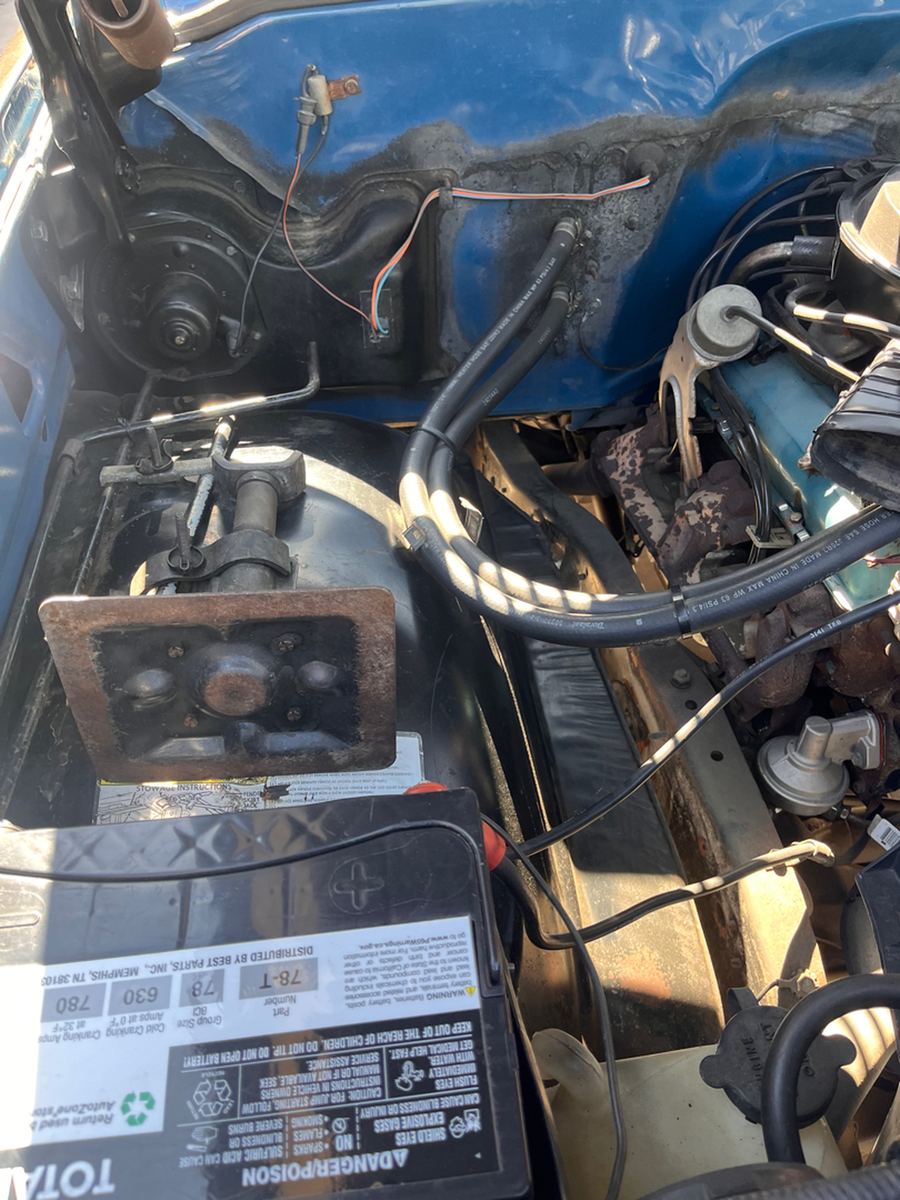
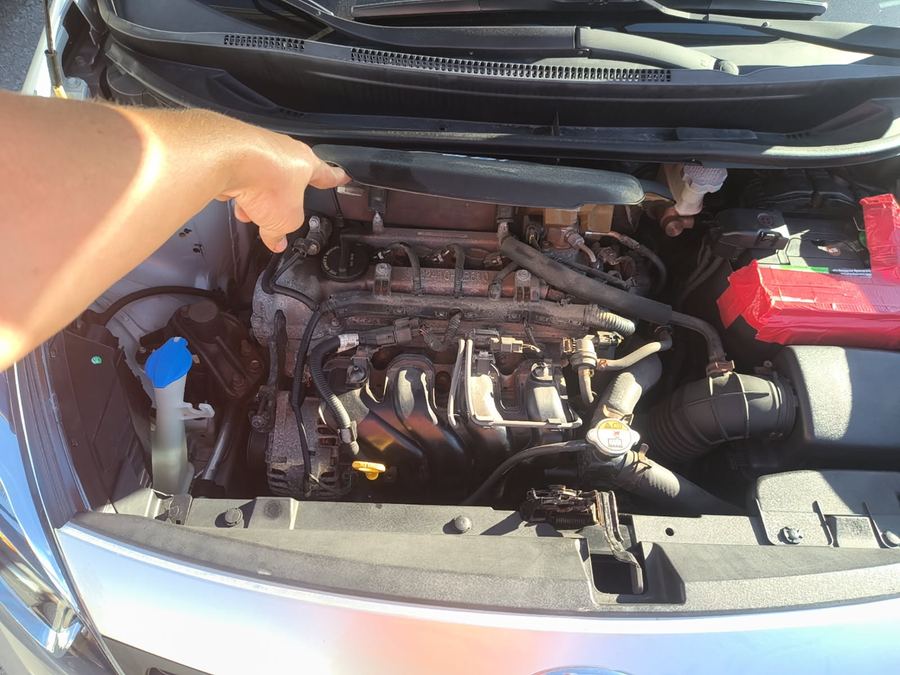
How We Check a Used Car's Battery
A battery is a cheap part next to an engine. But it tells you how the car was kept, and a failing charging system is not cheap. Here is what we look at.
- A cold start. We want the engine cold when we arrive. A slow, labored crank on a cold engine is the first sign.
- Voltage at rest and while charging. Our truck inspection form has a line for each, so the reading goes on the report, not just a pass.
- The date on the battery. Most have a sticker or a stamped code. Formats differ by brand, so the store that sold it can read it if we cannot.
- Terminals, cables and the hold down. Crust, loose clamps and a battery sliding around in its tray.
- Add on electronics. Dash cams, remote starters, stereos and alarms wired in by a past owner are the usual hidden drains.
- The scan. We read every module for stored codes, including charging system faults, even when the dash is clear.
You can see every line we check on our inspection checklist, and the readings we record on our pickup truck inspection form. If you are buying an EV, the small 12 volt battery still matters. Our EV form lists it as a common EV failure.
What a Brand New Battery on a Used Car Means
It can be good news. It can also mean the old one kept dying and nobody found out why. If a drain is still there, the new battery will go the same way in a few weeks.
Ask the seller why it was replaced. Ask for the receipt. Then look for add on electronics, and have the charging system checked. A seller who cleared codes along with the battery swap leaves tracks too, and our post on how sellers hide a check engine light shows what we look for.
How to Make a Battery Last Longer
Park in shade or a garage in summer. Drive at least 30 minutes now and then. Keep the terminals clean and the hold down tight. Use a battery maintainer on a car that sits for weeks.
Test it once it gets older. Consumer Reports says to have a battery load tested once a year after it turns two in a warm climate, or four in a cold one. When you buy a new one, it says to pick one less than six months old, and three months or newer is better.
Batteries are not a small problem on the road. AAA says it took about 7 million battery calls out of more than 27 million roadside calls in 2024 (AAA Newsroom, April 1, 2025). Towing and battery calls together were about 74% of the total.
Buying a Car That Sat in the Heat?
PPI Auto inspects used cars for buyers in all 50 states. We start it cold, read the battery and the charging system, and put the numbers in your report. See what a used car inspection covers, or check what an inspection costs.
Sources
- Consumer Reports, How Hot Weather Affects Your Car Battery, May 4, 2019
- AAA South Jersey, The Heat Is On, Is Your Battery Ready?
- AAA South Jersey, The Silent Summer Threat
- KXII, How Summer Heat Can Harm Your Car Battery, July 29, 2026
- Optima Batteries, What Does Heat Do to Car Batteries, September 15, 2020
- Battery Tender, Parasitic Battery Drain, How to Find and Fix It
- Firestone Complete Auto Care, 8 Things That Can Drain Your Car Battery
- AAA Newsroom, AAA Urges Drivers to Stay Proactive on Auto Repair and Maintenance, April 1, 2025
Common questions
What kills a car battery the most?
What can drain a car battery?
How long can a car sit before the battery dies?
How to make a car battery last longer?
What are some signs that my car battery is bad while I'm driving?
Should I worry if a used car has a brand new battery?
Buying a vehicle? Let us check it first.
Call 951-267-8500