What Is the Most Common Cause of a Check Engine Light?
 By Anthony LimpertASE Master Automobile Technician
Most answers say a loose gas cap. 2025 repair data says the catalytic converter, oxygen sensors and coils. The top 10 with costs, and the used car angle.
We plug a scan tool into every car we inspect. When the check engine light is on, it is almost never the gas cap. It is a sensor, a misfire, or a part in the exhaust that costs real money. That is not what most of the internet tells you, so let us start with the numbers.
The Short Answer
In 2025 the most common repair behind a check engine light was a new catalytic converter. Oxygen sensors came second and ignition coils with spark plugs came third. That is from the 2026 CarMD Vehicle Health Index, which ranks the repairs actually done to turn the light off (CarPro, April 23, 2026). A loose gas cap is not on that top 10 list at all.
- The top three causes in 2025 were the catalytic converter, an oxygen sensor, and ignition coils with spark plugs.
- The average repair to clear a check engine light hit a record $554 in 2025, up 33% from 2024.
- The gas cap was the fourth most common fix in 2018 data. By 2025 it had dropped off the top 10.
- A steady light means get it checked soon. A flashing light means a bad misfire that can wreck the catalytic converter.
- On a used car, a light that is off proves nothing. The codes may have been cleared, or the bulb may not work.
Why the Gas Cap Answer Is Out of Date
Search this question and the first answer you get is a loose gas cap. Kwik Fit puts it at number one on its list (Kwik Fit, September 27, 2022). Consumer Reports also says to tighten the cap first, because it often fixes the problem (Consumer Reports, updated March 1, 2026). That is good advice. It is free and takes ten seconds.
But the gas cap is the most common first guess, not the most common cause. CarMD tracked repairs on more than 7 million vehicles in 2018. A loose or damaged fuel cap was the fourth most common fix that year, behind oxygen sensors, ignition coils with plugs, and the catalytic converter (AftermarketNews, April 30, 2019). In the 2025 list, it is gone.
There is a fair reason for part of that. A cap you tighten yourself never turns into a repair order, so repair data can miss it. But the point stands for anyone staring at an orange light. If tightening the cap and driving a few days does not clear it, you are almost surely looking at a real part.
The 2025 Top 10, With What Each One Costs
The Light Is Rarely Cheap
Average cost with parts and labor for the ten most common check engine light repairs in 2025, listed from most common down.
Source is the 2026 CarMD Vehicle Health Index as reported by CarPro on April 23, 2026. Bars are drawn to scale against the $1,511 converter.
Look at what is on that list. Most of it is about burning fuel cleanly. Sensors that read the air and the exhaust, parts that make the spark, and the converter that cleans up after them. The ABS sensor is there because the list counts dashboard warning light repairs, not only the engine light. CarPro notes that CarMD tied the trend to older cars, with the average US vehicle now 12.8 years old, as coils, plugs, oxygen sensors, thermostats and air flow sensors wear out (CarPro).
| The Cause | Average Fix | What a Buyer Should Ask |
|---|---|---|
| Catalytic converter | $1,511 | Was there a misfire first? A new converter on an engine that still misfires will fail again. |
| Oxygen sensor | $287 | Is it the sensor, or its heater circuit wiring? The code tells you which. |
| Ignition coil and plugs | $480 | When were the plugs last done? Check the service records. |
| Mass air flow sensor | $346 | Is there an oily aftermarket air filter or a cracked intake boot? |
| EVAP purge valve | $172 | Has the light come back after a gas cap was blamed? |
| Fuel injectors | $572 | Is there a rough idle or a fuel smell? |
| Thermostat | $324 | Does the temp gauge climb to normal on the test drive, and stay there? |
Why the Catalytic Converter Lands at Number One
A catalytic converter does not usually just wear out on its own. Something upstream kills it. Consumer Reports explains that a blinking light on a newer car usually means a misfire so bad that unburned fuel is being dumped into the exhaust, which can quickly damage the converter (Consumer Reports).
So the chain goes like this. A $256 coil starts to fail. The owner ignores the light. Raw fuel cooks the converter. Now it is a $1,511 job. That is why the cheap causes and the expensive one sit on the same list. They are often the same problem at two different ages.
For a buyer, that chain matters. If you see a fresh converter on a car that still has a misfire code, the root problem was never fixed. The new part is on a clock.
Steady or Flashing Changes Everything
A steady light is not an emergency. Consumer Reports quotes Dave Cappert of the National Institute for Automotive Service Excellence, who says you do not need to pull over and call a tow truck, but you should get it checked soon. Fuel use and emissions can get worse even while the car feels fine (Consumer Reports).
A flashing light is different. That is the misfire warning from the last section. Back off the gas, and get the car looked at right away. Every mile with a hard misfire is a mile of raw fuel in the converter.
What It Costs to Find Out and to Fix
Finding the cause is the cheap part. Consumer Reports says a shop diagnosis runs around $90 (Consumer Reports). Reading a code is not the same thing. A code points at a system. A diagnosis finds the part.
Fixing it is where the money goes. CarMD put the average check engine repair at a record $554 in 2025. It said labor costs rose 51% and parts rose 23%, with tariffs on imported parts named as one reason (CarPro). Compare that with 2018, when the average was $381 (AftermarketNews).
What a Check Engine Light Means on a Car You Want to Buy
Here is the part the top results skip. When you are buying, the light being on is not the worst case. The worst case is a light that is off for the wrong reason.
There are two ways that happens. The first is cleared codes. Texas DPS says the car's self tests go back to Not Ready after codes are cleared or the battery is disconnected, and only come back after a mix of city and highway driving (Texas Department of Public Safety). New York's DMV lists the same two causes (NY DMV). So a car with a dark dash and a row of Not Ready monitors was very likely just cleared. Our post on how sellers hide a check engine light walks through it.
The second is a bulb that never lights. Every working check engine light should come on when you turn the key to on with the engine off, then go out once the engine starts. California's smog rules fail a car whose light does not come on with the ignition on and the engine off (16 CCR 3340.42.2). Watch for it yourself. If it never lights, ask why.
In smog states the light also ties straight to registration. Texas fails a 2001 or newer car with two or more Not Ready monitors (Texas DPS). Our page on smog readiness inspections covers what we check before you buy in a state that tests.
A Check You Can Do on the Lot
You do not need to be a mechanic to catch most of this. Do these before you talk price.
- Ask for a cold start. Turn the key to on first and watch the check engine light come on. Then start it and watch it go out.
- Look at the gas cap. Is it there, does it click, is the seal cracked? A cheap fix, and it takes a second.
- Ask when the battery was last changed or unplugged. Recent work resets the self tests, same as clearing codes.
- Feel for a misfire. A shake at idle or a stumble when you press the gas often lines up with coil and plug codes.
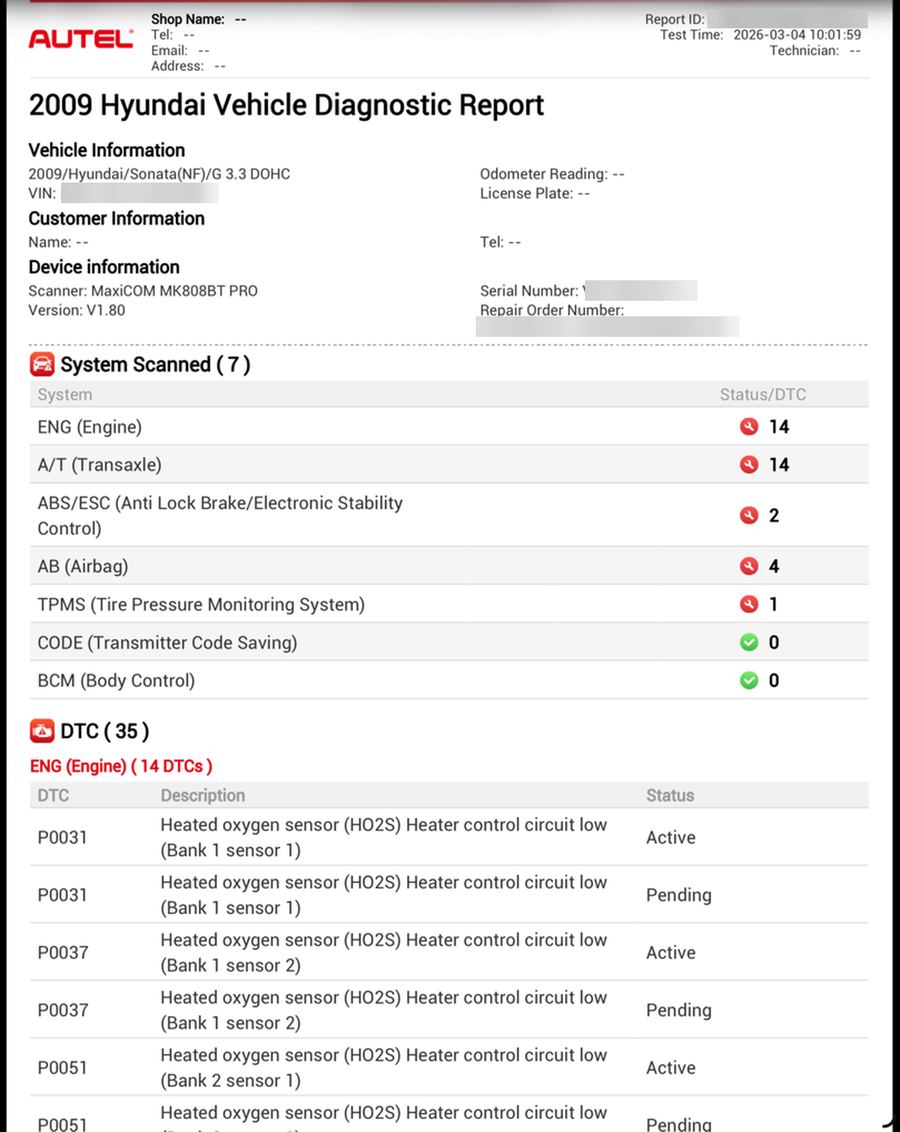
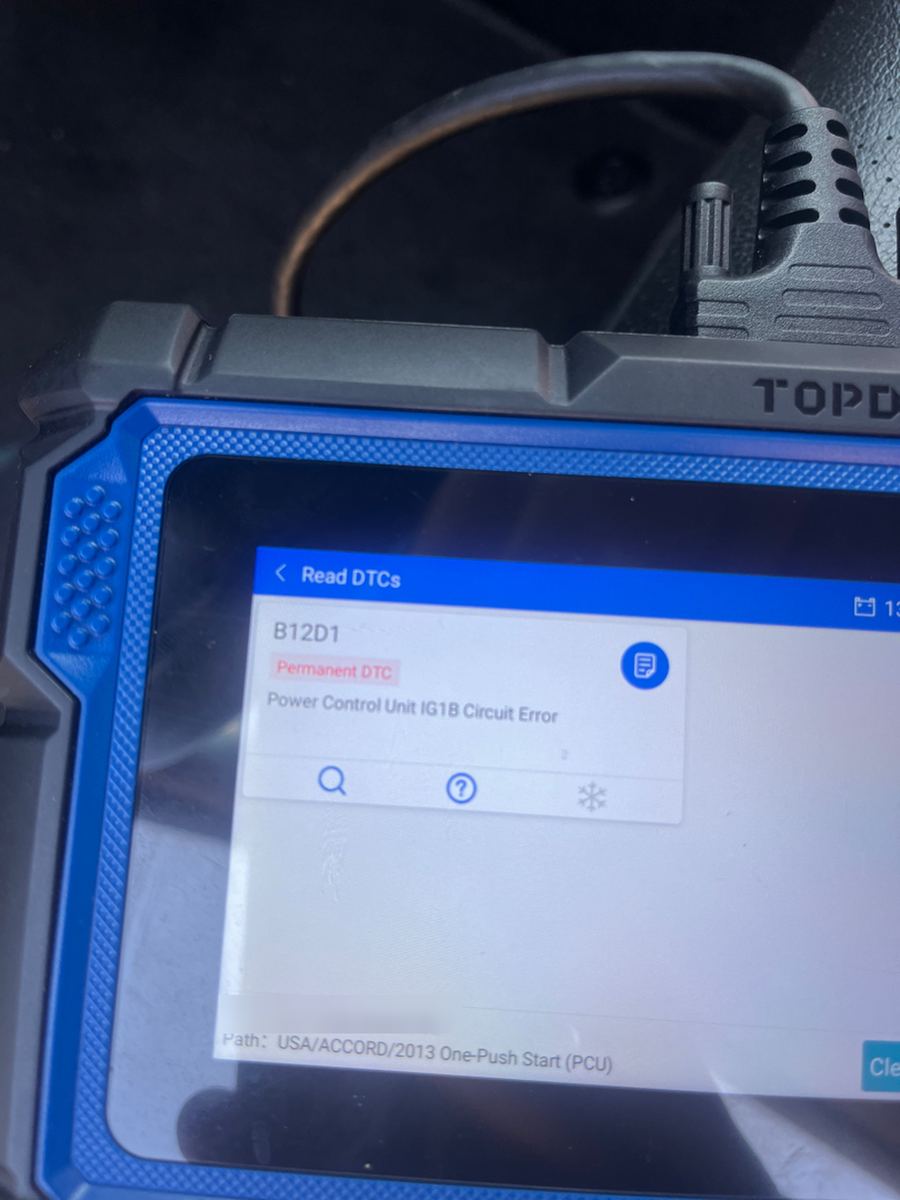
- Get the codes read, plus readiness. Stored, pending and permanent codes, and every monitor's status. A code with no readiness check is half the story.
- Price the fix before you sign. Use the table above. A converter code on a car priced like a clean one is a $1,511 conversation.
You can see every line we look at on our inspection checklist, and real scan reports from our jobs on our real inspections page.
Buying a Car With a Light On, or One That Just Went Off?
PPI Auto inspects used cars for buyers in all 50 states. We read every module, check readiness, and put the codes in your report. See what a used car inspection covers, or check what an inspection costs.
Sources
- CarPro, Annual CarMD Check Engine Light Report, Catalytic Converter Tops List, April 23, 2026
- AftermarketNews, CarMD Vehicle Health Index, Ignition Coils, Spark Plugs, O2 Sensors Tied for Most Commonly Diagnosed Check Engine Repair, April 30, 2019
- Consumer Reports, What Does the Check Engine Light Look Like, and What Does It Mean, updated March 1, 2026
- Kwik Fit, Everything You Need to Know About the Check Engine Light, September 27, 2022
- Texas Department of Public Safety, Emissions Testing
- New York DMV, What Do You Mean My Car's Not Ready?
- California Code of Regulations, Title 16, Section 3340.42.2
Common questions
What is the most common cause of a check engine light?
Can a loose gas cap cause a check engine light?
How much does it usually cost to fix a check engine light?
What does it mean when the engine warning light is on?
How do I reset the check engine light?
Should I buy a used car with the check engine light on?
Buying a vehicle? Let us check it first.
Call 951-267-8500