Blown Head Gasket Signs to Catch Before You Buy a Used Car
 By Anthony LimpertASE Business Built With Master Automotive Technicians
Eight checks for a blown head gasket on a used car, the test that proves it, a $2,572 to $3,386 repair, and Honda's new 10 year gasket coverage.
- The big four signs are overheating, coolant that keeps dropping, white smoke that smells sweet, and misfires.
- Look at the car cold. A warm engine hides the first two.
- A combustion leak test is the cheap proof. The fluid turns from blue to yellow when exhaust gas is in the coolant.
- The fix averages $2,572 to $3,386, mostly labor.
- Honda now covers the head gasket on many Civic, CR-V and Accord cars for 10 years or 150,000 miles. Check the VIN.
In California, the seller has to hand you a valid smog certificate (California DMV). Since July 1, 2019, that smog test on a 2010 or newer car also reads permanent trouble codes. A scan tool can't erase those, and a stored one fails the car even with the light off (Bureau of Automotive Repair).
That matters for head gaskets. A leaking gasket often sets misfire codes, and a fresh smog pass on a 2010 or newer car says no permanent code was stored that day. But a gasket that only eats coolant can pass smog all day. We wrote this so you can catch that one too, before your money changes hands.
What a Head Gasket Does
The head gasket is a thin, layered seal between the engine block and the cylinder head. It keeps oil, coolant and the fire in each cylinder apart (Firestone Complete Auto Care).
When it fails, those three mix. Coolant gets into a cylinder and burns. Exhaust gets pushed into the cooling system. Or oil and coolant meet. Heat is the top reason it fails. Firestone names long overheating first, then high cylinder pressure, worn gasket material and bad bolt torque from an earlier repair.
So the car's past matters as much as its present. One overheat years ago can be the start of a slow leak today.
Honda Just Extended Head Gasket Coverage
On August 26, 2026, American Honda extended its head gasket warranty on a long list of its best sellers. Honda says the gasket may not seal as well under certain conditions. That can cause overheating, coolant loss, misfires and codes P0300 to P0304 (Honda dealer message, on NHTSA).
| Model | Years Covered |
|---|---|
| Civic | 2016 to 2026 |
| Civic Hybrid | 2025 to 2026 |
| CR-V | 2017 to 2026 |
| CR-V Hybrid | 2020 to 2026 |
| Accord | 2018 to 2026 |
| Accord Hybrid | 2018 to 2026 |
Coverage runs 10 years from the original date of purchase or 150,000 miles, whichever comes first. Cars already too old get a six month grace period from the day Honda notifies the owner. The bulletins for 2016 and 2017 Civics and the 2017 CR-V expire May 31, 2027. Honda planned to start mailing owners in early October 2026, and it sent its dealers kits to check heads for warping.
For a buyer, that turns a $3,000 risk into a VIN check. Ask a Honda service desk to run the VIN before you buy. Ask the seller for the in service date, then do the math. A Civic first sold in spring 2018 with 90,000 miles is covered by age until spring 2028. That math is a rough guide, not Honda's promise for any one car. The PPI Auto buyer's guides for the 2016 to 2024 Civic, the 2017 to 2024 CR-V and the 2018 to 2022 Accord list the rest of what to check on each one.
Eight Checks on a Cold Car
Ask the seller not to start the car before you get there. A warm engine hides coolant loss and burns off smoke. Then go in this order.
- Touch the hood. Warm means someone started it. Ask why.
- Read the coolant tank cold. It should sit between the marks. Low, empty, or an oily film on top is a flag. Never open a hot radiator cap.
- Pull the oil cap and dipstick. Milky, frothy oil means coolant in the oil (CRC Industries).
- Look at the seam. Wet streaks of oil or coolant where the head meets the block, or coolant near the exhaust manifold, are signs too.
- Watch the tailpipe at start up. A little white vapor on a cold morning is normal. Thick white smoke with a sweet, syrupy smell after it warms up is coolant burning.
- Drive it 20 minutes. Take a hill or a freeway. The temperature gauge should climb to the middle and stay put.
- Look for bubbles. Back at the curb, with the engine running, watch the coolant tank. Steady bubbling is a warning sign (CRC Industries).
- Scan it. Read stored, pending and permanent codes. P0300 to P0304 are the misfire codes Honda ties to its gasket problem.
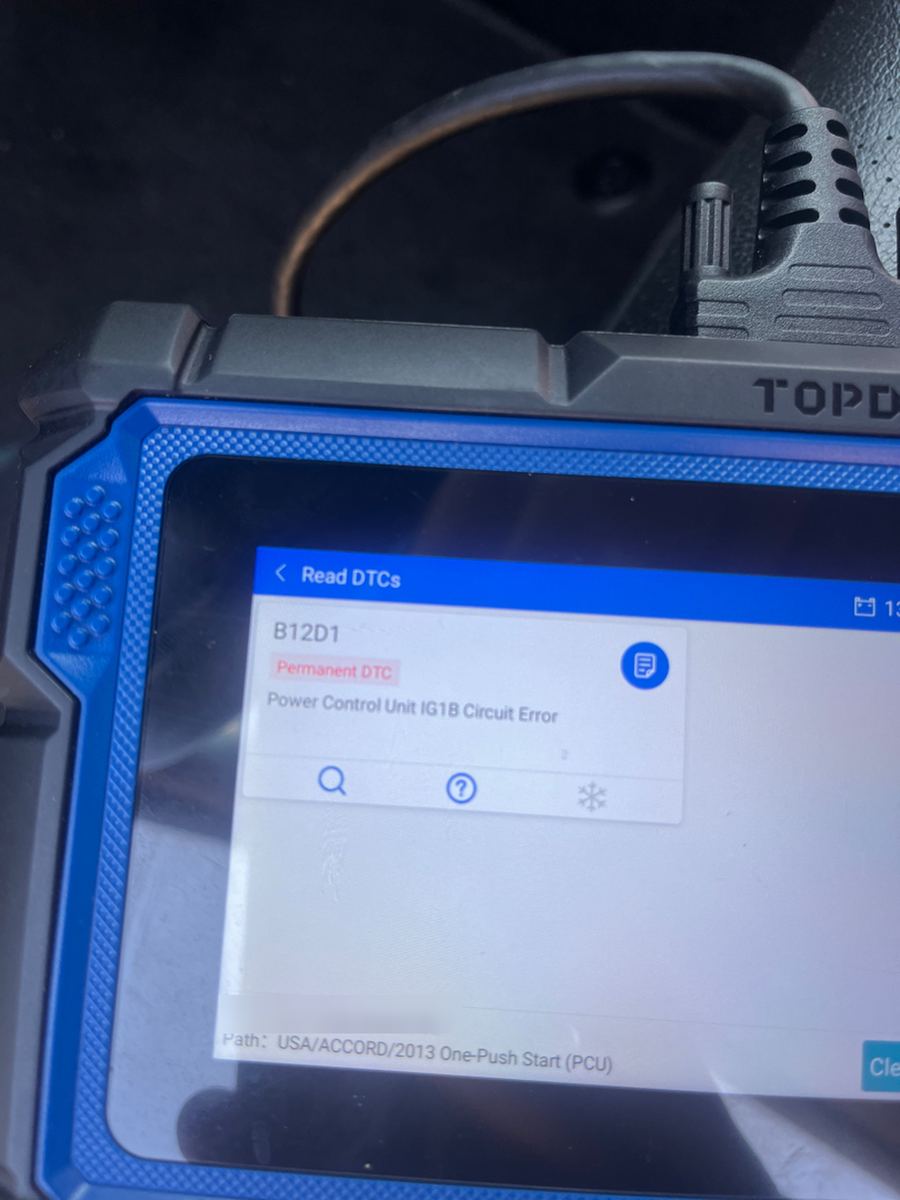
Then ask for paper. Receipts for coolant top offs, a new radiator, a thermostat or a cooling fan all point back to heat. A head gasket job with the receipt can be good news. A fresh one with no receipt is a question. The post on how sellers hide a check engine light covers the code clearing trick, and the used car test drive guide covers the rest of the drive.
What Looks Like a Blown Head Gasket but Isn't
Not every bad sign is the gasket. Three show up on good cars all the time.
- Short trip sludge. A car driven on short trips, or one that sits outside, can grow white gunk under the oil cap from condensation. A clean dipstick and clear exhaust from a warm engine point to condensation, not coolant (Danny's Engineportal).
- Another gasket. A failed intake manifold gasket can also leak coolant into the oil, by the same source.
- Cold morning vapor. Thin white vapor that clears once the engine warms is water, not coolant.
The usual advice says milky oil cap means walk away. That throws out good commuter cars. The dipstick, the coolant level and a warm tailpipe tell you more than the cap does. And a test tells you more than all three.
The Tests That Settle It
Shops use a few tests to confirm a head gasket. Firestone lists a compression test, a leak down test and a chemical test for exhaust gas in the coolant.
| Test | What It Finds | Parts Off? |
|---|---|---|
| Combustion leak (block) test | Exhaust gas in the coolant | No, it sits on the coolant tank |
| Cooling system pressure test | Coolant leaks, inside or out | No |
| Compression test | A cylinder that won't hold pressure | Yes, the spark plugs |
| Leak down test | Where a cylinder's air escapes | Yes, the spark plugs |
The block test is the quick one. A tester sits on the coolant opening and draws air through a blue fluid. The fluid turns yellow when it finds CO2, the gas in exhaust, and stays blue when it doesn't (Mastercool tester listing). Yellow on a used car you haven't bought yet is a clear answer.
One catch. A seller can pour a stop leak sealer into the cooling system. Some dealers sell it as a temporary fix for a small leak (Group 1 Honda Gulfport). Temporary is the key word. A car that passes today and fails in a month is why the history and the test drive still matter.
What the Repair Costs
RepairPal puts the average head gasket replacement at $2,572 to $3,386. Labor is $1,669 to $2,449 of that, and parts are $903 to $937 (RepairPal, updated September 3, 2026). Those figures leave out tax and don't adjust for where you live.
Head Gaskets by the Numbers
Grades from the PPI Auto dealer directory, September 24, 2026. Repair cost from RepairPal.
RepairPal notes its range may not include related repairs. A warped head is one, and it is why Honda sent its dealers kits to check for warping. On a $9,000 car, a $3,000 repair is a third of the price. Price it in, or walk.
What Buyers Say About the Lots
The PPI Auto dealer directory grades used car lots across the country. Buyers bring up head gaskets in their reviews at 52 of the 35,341 used lots it tracks, as of September 24, 2026. That is PPI Auto's own data.
Of the 49 that carry a grade, 41 percent are an F. Across all 16,252 graded used lots, 19 percent are. Only 12 percent of the head gasket lots earn an A, against 21 percent overall. A review is not proof of a bad car. But head gasket stories cluster at the worst lots. The guide to the signs of a bad car dealer shows what else to read for.
Walk, Price It, or Buy It
Use what you found to pick one of three.
- Buy it. Full coolant tank cold, clean dipstick, steady gauge, no misfire codes, and a blue block test. Or a covered Honda with a clean VIN check.
- Price it. One soft sign, like a low tank with no leak found, on a car you love. Get the block test, then offer less by the repair cost.
- Walk. A yellow block test, sweet white smoke after warm up, or a gauge that climbs on the drive. Same for milky oil on the dipstick with coolant missing.
Private sales have no return. In California, a dealer must offer a three day return on most used cars of $50,000 or less since October 1, 2026 (National Consumer Law Center). Use those days to drive it hot and check the tank each morning.
Verified Against
- American Honda, Warranty Extension, 2016 to 2026 Multi Model Cylinder Head Gasket, dealer message, August 26, 2026, on NHTSA
- California Bureau of Automotive Repair, On Board Diagnostic Test Reference
- California DMV, Smog Inspections
- Firestone Complete Auto Care, What Causes Head Gasket Failure, September 9, 2025
- CRC Industries, Spotting Blown Head Gasket Symptoms, revised May 5, 2026
- Danny's Engineportal, White Stuff Under My Oil Filler Cap, April 7, 2025
- Mastercool 43710 Combustion Gas Leak Tester Kit listing
- Group 1 Honda Gulfport, Symptoms of a Blown Head Gasket
- RepairPal, Head Gasket Replacement Cost Estimate, updated September 3, 2026
- National Consumer Law Center, SB 766 press release, September 11, 2025
- PPI Auto dealer directory, 35,341 used car lots, September 24, 2026 (our own data)
We scan and road test every car we inspect, and a combustion leak test is there when the signs call for it. See what a used car inspection covers, or check what an inspection costs before you drive out to see one.
Real Questions From Real Calls
What are the first signs of a blown head gasket?
What can be mistaken for a blown head gasket?
Can I drive with a small head gasket leak?
How much does it cost to replace a head gasket?
Is it worth fixing a head gasket?
Does Honda cover head gaskets on the Civic and CR-V?
Buying a vehicle? Let us check it first.
Call 951-267-8500