Used Toyota Prius Buyer's Guide (2016–2022)
Check the 2016 to 2018 wire harness fire recall, drive power and brake booster recalls, coolant leaks, cracked windshields and battery coverage.
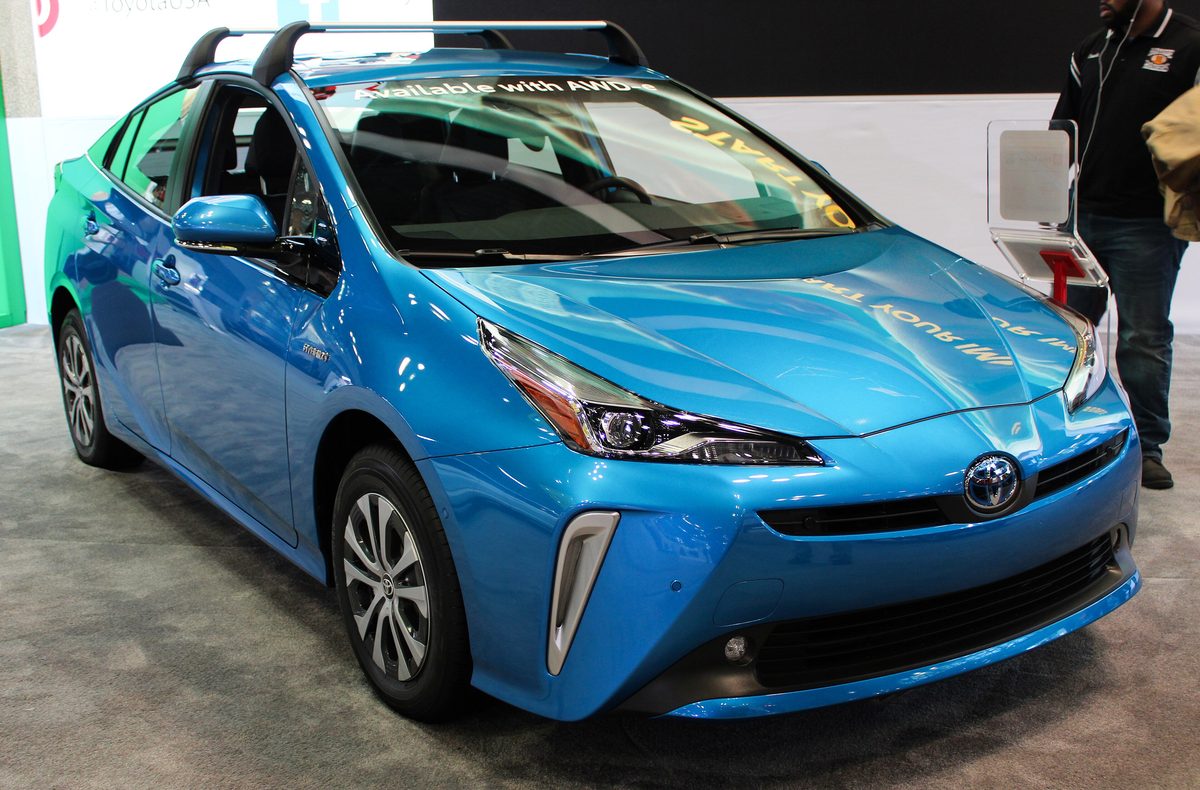
Photo: Kevauto, Wikimedia Commons, CC BY-SA 4.0. A representative example, not a car we inspected.
The fourth generation Prius ran from 2016 to 2022. It is the hybrid liftback many people think of when they hear the name, and buyers pick it for low running costs and Toyota's record. This guide covers the regular Prius only. The Prius Prime, Prius c and Prius v are separate models with their own records.
Every car here uses a 1.8L four cylinder engine paired with electric motors and an electronic CVT. A refresh came for 2019, and an all wheel drive version called AWD-e was added that year.
The early years carry most of the recalls and complaints. The 2016 has five recalls, including a wire harness that can short and cause a fire, an inverter part that can shut the hybrid system down, and two air bag recalls. Many 2016 and 2017 owners also reported cracked windshields. Toyota extended the hybrid battery warranty for 2020 and newer models.
- 1.8L 4-cyl hybrid (2ZR-FXE)
Fourth generation (XW50) liftback, sold as model years 2016–2022.
| Engine | Years | Transmission | What to know |
|---|---|---|---|
| 1.8L hybrid, front wheel drive | 2016–2022 | Electronic CVT | The main version. Some cars use a NiMH hybrid battery. |
| 1.8L hybrid, AWD-e | 2019–2022 | Electronic CVT | Adds an electric motor for the rear wheels. |
- Two and Two Eco Base trims of the early years. Two Eco was tuned for the best economy.
- Three and Three Touring The most common early trims, with more features.
- Four and Four Touring Top early trims with leather style seats.
- L Eco Base trim after the 2019 refresh.
- LE and XLE Core trims from 2019. AWD-e came in LE and XLE.
- Limited Top trim from 2019.
- 2020 14 NHTSA owner complaints and no recalls in NHTSA's data, and the first year with the 10 year or 150,000 mile hybrid battery warranty. Newer cars have had less time to collect complaints.
- 2021 Only 6 complaints and no recalls in NHTSA's data, plus the longer battery warranty. Check that pre-collision campaign 21TC06 was done.
- 2016 The most NHTSA owner complaints by far (179, with 42 coded to visibility, mostly windshield cracks) and five recalls: wire harness fire risk, inverter, parking brake and two air bag recalls.
- 2017 91 complaints and three recalls in NHTSA's data, including the wire harness and parking brake recalls. Windshield crack complaints continue.
- 2019 30 complaints but three recalls, including the brake booster pump and the blank meter recall. Also in the coolant leak and weak pull bulletins.
Picked from the recalls, bulletins and NHTSA complaint records below, not from a reliability rating. Any single car can be better or worse than its year.
NHTSA recall 18V-579 covers certain 2016 to 2018 Prius models. Part of the engine wire harness at the hybrid power control unit can rub its cover, wear and short circuit. That raises the risk of a fire. Dealers inspect the harness, replace it if damaged, and add a protective sleeve or tape, all free.
WE CHECK We check the VIN for an open recall and look at the harness near the power control unit for wear or burn marks.
SOURCE NHTSA recall 18V-579
NHTSA recall 17V-658 covers certain 2016 Prius models. A capacitor inside the hybrid inverter may not have been bolted down, so driving vibration can damage it and shut down the hybrid system. Dealers replace the inverter for free. Recall 21V-734 covers certain 2022 Prius models whose engine computer software may falsely detect an error and shut down the hybrid system. Dealers update the software for free. Both can cause a loss of drive power.
WE CHECK We check the VIN for open recalls, scan the hybrid system for stored codes, and road test.
SOURCE NHTSA recall 17V-658 · NHTSA recall 21V-734
NHTSA recall 19V-544 covers certain 2019 Prius models. The brake booster pump may fail, which can turn off stability control and cut brake assist. Dealers inspect and replace the pump if needed, free. Separately, a Toyota tech tip for 2016 to 2018 Prius models lists cases with several warnings at once, such as the ABS light, a low brake force message and a brake light that does not work. Some 2016 owner complaints coded to service brakes in NHTSA's file report similar warning lights.
WE CHECK We check the VIN for an open recall, scan the brake and stability systems for codes, check the brake lights, and test pedal feel on the road test.
SOURCE NHTSA recall 19V-544 · Toyota tech tip T-TT-0493-18: multiple brake warnings, 2016 to 2018 Prius (on NHTSA) · NHTSA owner complaints, 2016 Toyota Prius
NHTSA recall 16V-672 covers certain 2016 Prius models built from November 30, 2015 to June 14, 2016. The front passenger air bag inflator may partly inflate on its own. Dealers replace the air bag assembly for free. Recall 18V-085 covers certain 2016 Prius models whose air bag pressure or acceleration sensors may fail, so the side curtain or front air bags may not deploy. Dealers replace the sensors as needed, free.
WE CHECK We check the VIN for open recalls and watch the air bag light.
SOURCE NHTSA recall 16V-672 · NHTSA recall 18V-085
NHTSA recall 16V-741 covers certain 2016 and 2017 Prius models built from August 6, 2015 to October 3, 2016 with a foot parking brake. The cable may come loose. If the car is left out of Park with the system on and the driver gets out, it may roll. Dealers install a clip on the cable end for free.
WE CHECK We check the VIN for an open recall and test that the parking brake holds.
SOURCE NHTSA recall 16V-741
Toyota bulletin T-SB-0135-19 says some 2016 to 2019 Prius models can leak coolant at the front exhaust pipe heat exchanger. Signs are a low coolant level, a check engine light with code P148F00, or poor heater output. Toyota updated the part. The bulletin says the repair falls under the federal emission warranty of 8 years or 80,000 miles from the in service date, and longer in some states that follow California rules.
WE CHECK We check the coolant level, scan for code P148F00, check heater output, and look under the car at the front exhaust pipe for coolant.
SOURCE Toyota service bulletin T-SB-0135-19: low coolant, P148F00 (on NHTSA)
Toyota bulletin T-SB-0241-17 says some 2016 to 2019 Prius models with a NiMH hybrid battery may have reduced power when pulling away from a stop. It can happen after long downhill drives or hot weather, then a 1 to 2 hour stop. The battery gauge may also stay at one bar. The fix is a hybrid control computer update for cars built before a production change.
WE CHECK We road test from a stop, watch the hybrid battery gauge, and read the records for the software update.
SOURCE Toyota service bulletin T-SB-0241-17 Rev1: reduced power from a stop (on NHTSA)
Most of the 42 complaints coded to visibility for the 2016 Prius in NHTSA's file describe the windshield cracking, often with no clear impact. The 2017 file shows the same pattern. We found no recall or warranty extension for it.
WE CHECK We look over the whole windshield for cracks and chips, and ask whether it has been replaced and with what glass.
SOURCE NHTSA owner complaints, 2016 Toyota Prius · NHTSA owner complaints, 2017 Toyota Prius
NHTSA recall 19V-876 covers certain 2019 Prius models whose main meter can short out and go blank, losing the speedometer and fuel gauge. Dealers replace parts as needed, free. Toyota campaign J0R reprogrammed the clearance sonar on certain 2016 to 2018 cars because it could apply the brakes in some car washes. Campaign 21TC06 updated the pre-collision brake assist software on certain 2021 cars. Both updates are free.
WE CHECK We check the VIN for open recalls and campaigns, watch the dash for blank screens, and scan the safety systems for codes.
SOURCE NHTSA recall 19V-876 · Toyota special service campaign J0R: clearance sonar reprogram (on NHTSA) · Toyota special service campaign 21TC06: pre-collision software (on NHTSA)
Toyota extended the hybrid battery warranty to 10 years from first use or 150,000 miles for 2020 model year hybrids, and the Prius is on its list. Toyota says it covers later owners too. Other hybrid parts stay at 8 years or 100,000 miles. Earlier Prius models have the older 8 year or 100,000 mile coverage.
WE CHECK We note the in service date and mileage so you know how much battery coverage is left, and scan the hybrid system for battery faults.
SOURCE Toyota Newsroom: battery warranty extended for 2020 hybrids
- Check the VIN for open recalls and campaigns, especially on 2016 to 2019 cars.
- Scan the hybrid, brake and safety systems for stored codes.
- Check the coolant level and look for leaks at the front exhaust pipe.
- Road test from a stop and watch the hybrid battery gauge.
- Check the brake lights, pedal feel and parking brake.
- Look over the windshield for cracks.
- Work out how much hybrid battery coverage is left from the in service date and mileage.
- Proof of recall work on 2016 to 2018 cars: 18V-579 wire harness, plus 17V-658, 16V-672, 18V-085 and 16V-741 on 2016 cars.
- Any exhaust heat exchanger replacement for coolant loss under T-SB-0135-19.
- The hybrid control computer update from T-SB-0241-17 on 2016 to 2019 cars.
- Any windshield replacements.
- Hybrid battery cooling fan and filter cleaning, and any hybrid battery work.
- Regular oil changes and coolant checks.
Each year has its own guide. The engines, the transmission, and what changed that year.
A TSB is a note the maker sends to dealers about a known fix. They are not recalls. We check the bulletins so we know what to look for:
Cold-start noise, drivability, and idle issues for this vehicle. We test for each.
Shift quality and transmission fluid updates. We drive every gear.
Locks, wipers, infotainment, and trim items. Small, but good to know.
Bulletins stay with the maker, so we pull the current list for this exact vehicle during the inspection and tell you what applies.
Found a Toyota Prius you like? A pre purchase inspection checks every trouble spot above on the car you are buying.
What is the Prius wire harness fire recall?
Why do 2016 and 2017 Prius windshields crack?
Why does my Prius lose coolant?
How long is the Prius hybrid battery warranty?
Does this guide cover the Prius Prime?
Which used Prius years are best?
We'll check it first
Pre-tagged for the Toyota Prius. One call and a tech is on it.
951-267-8500Call nowRequest a Toyota Prius inspection
Pre-tagged for the Toyota Prius.
Buying a Toyota Prius? Let us check it first.
Engine-specific checks, a live recall pull, and a clear report.