Rebuilt vs Remanufactured Transmission on a Used Car
 By Anthony LimpertASE Business Built With Master Automotive Technicians
Author Source EEAT Authors · Anthony's Author Page
No study sets a lifespan for a rebuilt transmission. The invoice and the warranty tell you how long this one is backed, and who pays if it fails.
- A rebuilt transmission has no set lifespan. No carmaker or agency publishes one.
- The warranty is the one number in writing. Read its time, its miles and who it covers.
- Remanufactured means rebuilt at a factory that does that work all the time. That comes from a federal rule.
- In California, the shop has to mark rebuilt parts on the invoice and keep its records for three years.
- No invoice and no warranty means you price the car as if the transmission is unknown.
In California, a rebuilt transmission leaves a paper trail by law. A repair shop has to write every job on an invoice. That invoice has to say clearly when a part is used, rebuilt or reconditioned (California Business and Professions Code 9884.8). The shop also has to keep its records for at least three years (Section 9884.11).
So when a listing in Riverside or Fresno says new transmission, ask for that invoice. The seller who paid for the job got a copy. Ask for that paper on any car with a rebuilt unit. A short test drive can't tell you how a rebuild will age. The invoice and the warranty can.
No One Publishes a Rebuild Lifespan
Search the question and the numbers are all over the map. One transmission shop says most rebuilds last about 50,000 miles (Dot Transmissions, February 2026). Other shop pages claim 150,000 miles or more. None of them point to a study.
That isn't a knock on rebuilds. A rebuild is a repair, and repairs vary. Two units with the same label can hold very different work.
The federal rule shows why. Under the FTC's guides for used auto parts, a part can be called rebuilt only if it was taken apart and cleaned. Worn or broken parts have to be fixed or replaced, so the unit is in sound working condition (16 CFR 20.3). The rule doesn't list which parts must be new. The builder decides.
A Denver transmission shop sums up what makes one last. The cause of the failure gets fixed, the right parts go in, and the valve body and pump get serviced (A-Affordable Transmissions). A rebuild that skips the cause can fail the same way twice.
So the useful question changes. You don't need to know how long rebuilds last in general. You need to know how long this one is backed, and who pays if it quits.
Rebuilt vs Remanufactured vs Used
Sellers use these words loosely. They mean different things, and they come with different paper.
| Type | Who Builds It | Warranty You May See |
|---|---|---|
| Shop rebuild | A local transmission shop, often on the car's own case | Often local, one or two years |
| Remanufactured | A factory that rebuilds units all the time | Up to 3 years or 100,000 miles on Jasper units, nationwide |
| Used unit | Pulled from another car, not rebuilt | Whatever the seller puts in writing |
Remanufactured is not just a sales word. Under the same FTC guides, a part can be called remanufactured or factory rebuilt only if it was rebuilt at a factory that does that work regularly (16 CFR 20.3).
Jasper is one of the big remanufacturers. It says every unit is tested to the maker's specs. It backs its gas transmissions for up to 3 years or 100,000 miles, parts and labor, nationwide and transferable (Jasper Engines and Transmissions). The shop warranty row comes from the Denver shop above, which says its rebuilds carry a local warranty of one or two years.
A used unit is a gamble on a car you never saw. In California it still has to be listed as used on the invoice, under the same 9884.8 rule.
The Warranty Is the Only Number in Writing
With no lifespan to go on, the warranty is the best number you'll get. It shows how long the builder is willing to stand behind the work.
Federal rules help you read it. A written warranty on a consumer product over $15 has to say who it covers if it's limited to the first buyer. It also has to say how long it lasts and the steps to get service (16 CFR 701.3).
- Time and miles. Most read whichever comes first. Work out both from the invoice date and mileage.
- Who it covers. First buyer only, or the car. Ask what a transfer takes before you pay.
- Where you get service. A local warranty from a shop 300 miles away is close to no warranty.
- The rules. Some ask for fluid service or records to keep coverage. Read them.
Take a sample car. Its transmission was rebuilt in March 2025 at 112,000 miles, with a 3 year or 100,000 mile warranty. You look at it in November 2026 with 131,000 miles on it.
Which Runs Out First
Sample car. Rebuilt March 2025 at 112,000 miles, seen November 2026 at 131,000 miles.
The miles look like plenty. The calendar wins. That car has 16 months of coverage left, not 81,000 miles. The math is ours, on a made up car. Run it again with the dates and miles on the real paper.
Papers to Ask the Seller For
Ask for these before the test drive. A seller who had the work done should have most of them in a folder.
- The invoice. Shop name, date, mileage at the time and the VIN. Match the VIN to the car in front of you.
- The written warranty. The terms themselves, not a line in the ad.
- What was replaced. Line by line. Clutches and seals only is a smaller job than a unit with new hard parts and a serviced valve body.
- Why it failed. Heat, towing, a leak or a bad cooler line. A cause that is still there can kill the new one.
- Service since. Fluid changes after the rebuild, with dates and miles.
If the seller lost the invoice, ask for the shop's name. In California the shop still has to keep its records for three years. With the seller's okay, the shop can often confirm the job and whether the warranty moves to you.
What Buyers Say When Transmissions Come Up
The PPI Auto dealer directory grades used car lots from their public reviews. It has 15,572 graded used lots. Of those, 14.9 percent grade an F. That is PPI Auto's own data, from the October 2026 refresh.
Share of Lots Graded F
By what buyers bring up in reviews. PPI Auto dealer directory, October 2026.
Buyers bring up transmissions at 308 graded lots. Half of them, 51 percent, grade an F. Lots where engines come up are close behind at 43 percent, across 759 lots. Lots where the warranty comes up sit near the middle at 18 percent. Where buyers talk about an extended warranty, only 7 percent are an F.
A topic coming up doesn't say which way a review went. It does show where the trouble clusters. A lot that sells a rebuilt car with paper behind it isn't the risk. A transmission that quits a month after the sale, with nothing in writing, is.
Check the Car, Not Just the Paper
Paper tells you who pays. The car tells you whether you'll need them to.
- Scan the transmission module. Not just the engine. Stored and pending codes both count.
- Check readiness. Codes are often cleared during a repair. Monitors that haven't finished can hide a fresh problem. The smog readiness check shows how to read them.
- Look underneath. Leaks at the pan, the cooler lines and the axle seals. A torn mount too.
- Drive it cold and hot. Shifts up and down, a stop then reverse, and highway speed once it's fully warm. Slips and flares often wait for heat.
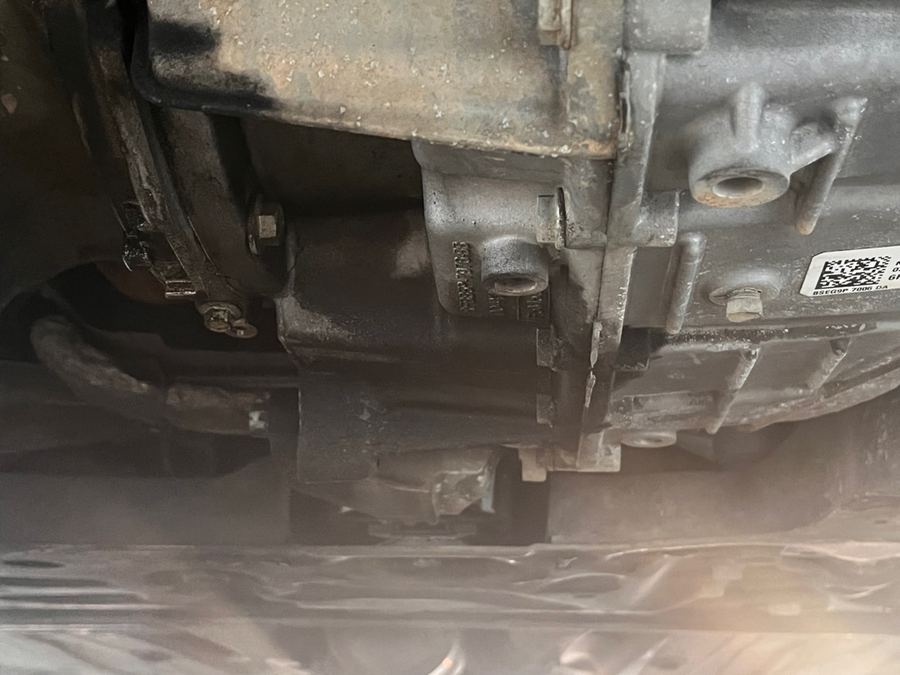
A CVT is its own case. Those units are often replaced, not rebuilt, and some makers extended their coverage. The post on CVT transmission problems on a used car covers what to check there.
Buy It, Price It, or Walk
Put the paper and the car together, then pick one.
- Buy it. An invoice with the right VIN, a written warranty with time left that covers you, clean shifts hot and cold, and no codes.
- Price it. It drives fine but there is no paper. Treat the transmission as unknown and price in the risk.
- Walk. Slips, flares, harsh shifts, stored codes, or a seller who won't let it be scanned.
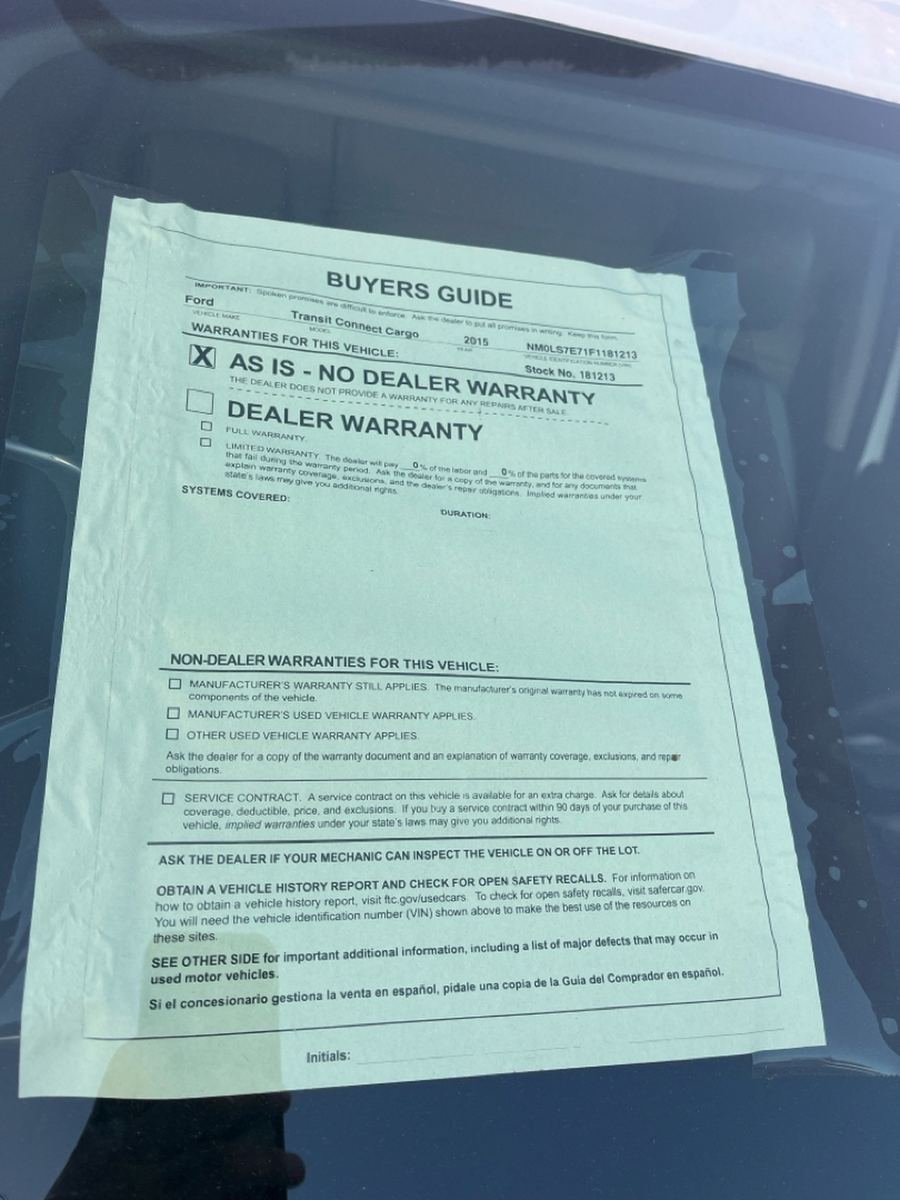
Read the window sticker too. The FTC says As Is, No Dealer Warranty means you take the risk of anything that goes wrong after the sale. It also says paying an independent mechanic to inspect a used car is always a good idea (Federal Trade Commission, April 2024). A rebuild warranty from the shop can still apply on an as is car. Only the dealer's own warranty is gone.
The usual advice calls a rebuilt transmission either better than new or a red flag. Both skip the paper. A rebuild with an invoice and a warranty that follows the car can be a safer bet than a high mile original that was never serviced.
Verified Against
- California Business and Professions Code Section 9884.8, repair invoices, via FindLaw
- California Business and Professions Code Section 9884.11, records kept three years, via FindLaw
- 16 CFR 20.3, rebuilt and remanufactured parts, Cornell Legal Information Institute
- 16 CFR 701.3, written warranty terms, Cornell Legal Information Institute
- Jasper Engines and Transmissions, Why Choose Jasper
- Federal Trade Commission, Buying a Used Car From a Dealer, April 2024
- A-Affordable Transmissions, Transmission Rebuild vs Replacement
- Dot Transmissions, Life Expectancy of a Transmission Rebuild, February 2026
- PPI Auto dealer directory, 15,572 graded used car lots, October 26, 2026 refresh (our own data)
Every PPI Auto inspection checks shift quality, slip, shudder, fluid and stored codes. See what a used car inspection covers, or check what an inspection costs.
Real Questions From Real Calls
How long will a rebuilt transmission last?
Is a rebuilt transmission as good as new?
Is remanufactured better than rebuilt?
Does a transmission warranty transfer when you buy the car?
Should I buy a used car with a rebuilt transmission?
How can I tell if a transmission was rebuilt?
Buying a vehicle? Let us check it first.
Call 951-267-8500